

What’s the word for that?
Dear Friends,
Well, AI is failing me today. Or - perhaps more likely - AI is succeeding where I’m failing: I think there’s a word for something but I haven’t been able to to summon it, so maybe the word I think exists doesn’t actually exist? Even with multiple AI searches and thesaurus explorations, no dice. (However, trying to think of this word has actually helped me fall asleep several times over the last four nights! First, I’ll think, “Maybe it’s...” Then I scan my mental thesaurus for synonyms. Still haven’t awakened with the word I’m looking for, but, hey, it stops the thought-swirling from keeping me awake at night!)
The word I’m looking for is that moment of personal realization when you finally see yourself as you are: A moment of honest self-recognition. Kinda-sorta self-awareness, but that’s not quite right either. Perhaps, at some level, it’s the dawning of shame or guilt?
[Sidebar: Having written a doctoral dissertation on shame and guilt, I’m working hard not to spend a couple of paragraphs unpacking that difference. Suffice it to say, shame is about “who I am” while guilt is about “what I did”. One is more state-of-being while the other is more tied to action or lack thereof. BTW: Our weekly reminder that we are “loved and accepted, forgiven and freed” came about as a way to convey that God’s grace is about more than forgiveness. Forgiveness can satisfy our guilt, but it does nothing for our shame; gotta have love and acceptance to begin to assuage shame! It is powerful to think about the shame of the cross tending our shame, but most atonement theories out there stay focused on guilt and forgiveness. Heavy sigh. End of Sidebar.]
Back to the search for that elusive word. It takes honesty, integrity, courage and humility to face our true selves in the mirror - even more to see ourselves. It’s a risky thing to do. Some of the words I considered, as I looked for the word that I haven’t yet found, include contrition and compunction, and remorse and regret. What I’m after, though, is that moment of recognition that comes a split-second after we’ve seen ourselves clearly yet before we begin to judge what we see.
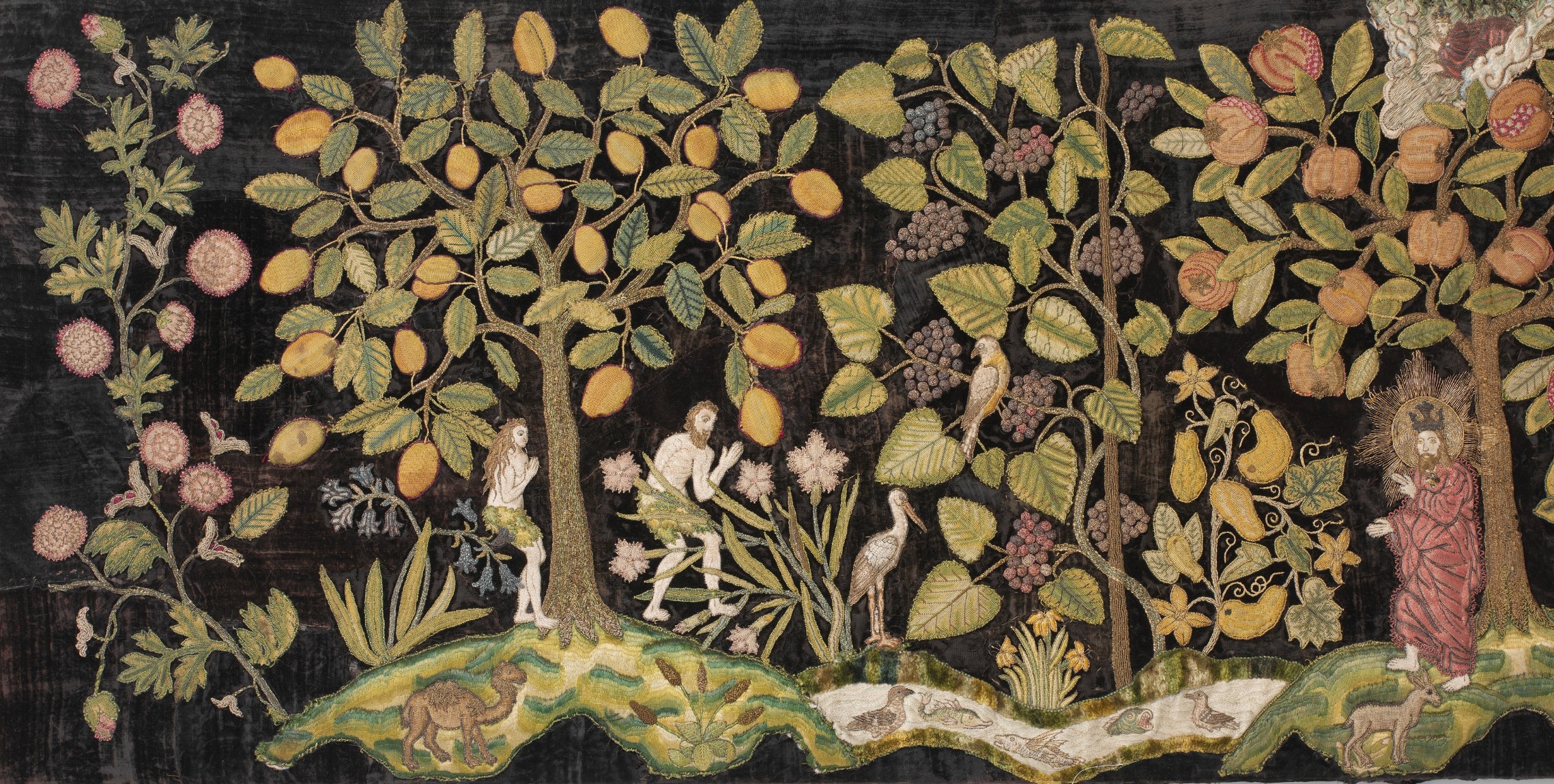
When I was writing the dissertation that I mentioned up there in the Sidebar, I explored how this moment was a “fall into consciousness.” I’d been reading a re-interpretation of the Eden story where humanity’s so-called “fall from grace” was re-cast in terms of a “fall from innocence” or, better yet, a “fall into consciousness.” In the case of the Genesis story, it’s a recognition of right and wrong; seen more broadly, it’s the recognition that we are creatures and not the Creator. (Of all the many forms of our idolatry, our ultimate idolatry is to think we are our own god.) Of course, shame, guilt, humiliation, regret, contrition, remorse, compunction - all of these come crashing in a millisecond or so after that first clear appraisal of oneself. But the flash of recognition has to come first. (Ohhh, get ready: I feel another Sidebar coming...)
[Sidebar: How I wish that, in the millisecond between the flash of recognition and the onslaught of self-judgement, we could see the face of our Creator who, long before we ever fell into consciousness, kissed us into being and called us good. And all of that while knowing full well that we are mortal and feeble and therefore prone to sin and shame. If only that moment of never-withheld grace could intervene between our self-recognition and self-judgment! What a very different world we’d inhabit. End of Sidebar.]
About now you’d be right in wondering, “Where’s this coming from?” (Or, for any grammatical purists in this blog entry’s audience, “Whence come these ponderings?” Even if it’s generally accepted these days, I’m still uncomfortable ending sentences with a preposition.) Well, it comes from the story of Naaman, which you’ll find in Second Kings, chapter 5. Of the fifty-eleven sermons lurking in that chapter, I think his millisecond of self-recognition might be the most compelling.
As you prepare to hear what I think about that, maybe look into a mirror (although I suppose you realize that I don’t mean the kind made of glass?). Set aside - for at least a few seconds - any judgement of what you see as you gaze into this metaphorical mirror. ‘Cus I think, if you can manage to set aside the judgy bits, you might see your Creator with more clarity even as you will have seen yourself with a little more clarity.
See you Sunday!
Peace,
Lisa
(P.S. I’d welcome your word suggestions if you want to share them. LMK as well if you’d want to hear more about that whole “fall into consciousness” thing.)
Photo credit: Public domain image from the Metropolitan Museum. The photo is of a late 16th century British tapestry depicting the Garden of Eden.
Some fine print:
New entries are typically posted on Monday, but sometimes don’t happen until Tuesday.
After that, if the post is from a prior week, one of three things is likely the case:
a) I’m on study leave or vacay and I forgot to schedule a post to go up in my absence,
b) it’s Holy Week, Christmas week, or some other crazy season in the life of the church, or
c) it’s purely a case of my being scatterbrained, distracted or otherwise memory-challenged.
In the event of a) or b) I pray your grace prevails!
If you suspect it’s situation c), I’d appreciate a gentle e-mail nudge.
Thanks friends!
btw: blog content Copyright 2026 LFWHebacker, unless another author is credited.